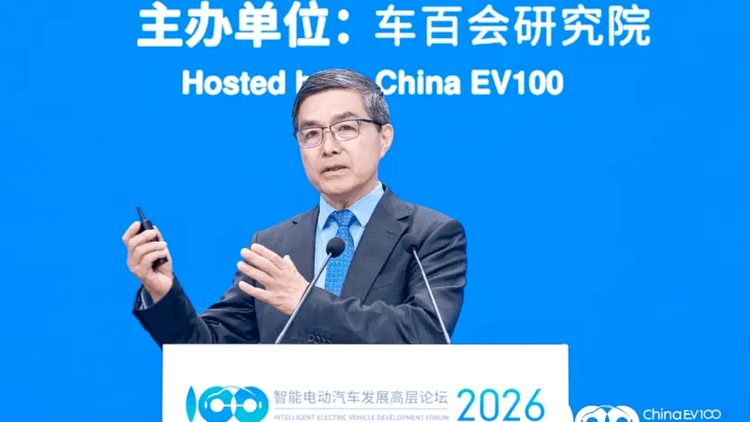
Professor Ouyang Minggao of Tsinghua University has shared a bold vision for the future of the automotive industry at the Beijing Intelligent EV Forum. His analysis suggests that we are witnessing the final chapter for internal combustion engines (ICE) and even transitional hybrid technologies.
Efficiency: The Ultimate Deciding Factor
The professor’s thesis is rooted in energy physics. Battery Electric Vehicles (BEVs) show a staggering lead in overall efficiency:
Twice as efficient as hydrogen-powered transportation.
Four times more efficient than ICE vehicles running on synthetic fuels.
This fundamental advantage makes plug-in hybrids (PHEVs) and extended-range EVs (EREVs) less competitive. According to the expert, these bridge technologies have already entered a phase of decline.
The Roadmap to 2040
The transition is expected to follow a clear timeline:
By 2030: New Energy Vehicles (NEVs) will hold over 70% of the market share, with a 7:3 ratio favoring pure EVs over hybrids.
By 2035: The market share will rise to 80%, while hybrids will account for only 20% of sales.
By 2040: BEVs are projected to command 90% of the global market, effectively ending the debate over the future of automotive propulsion.
The Global and Local Outlook
This shift is driven by rapid battery advancements and aggressive environmental policies. For developing markets like Moldova, this trend highlights the critical need for infrastructure readiness. The transition to electric power is no longer just an environmental goal; it is a technological inevitability that will redefine global mobility.